
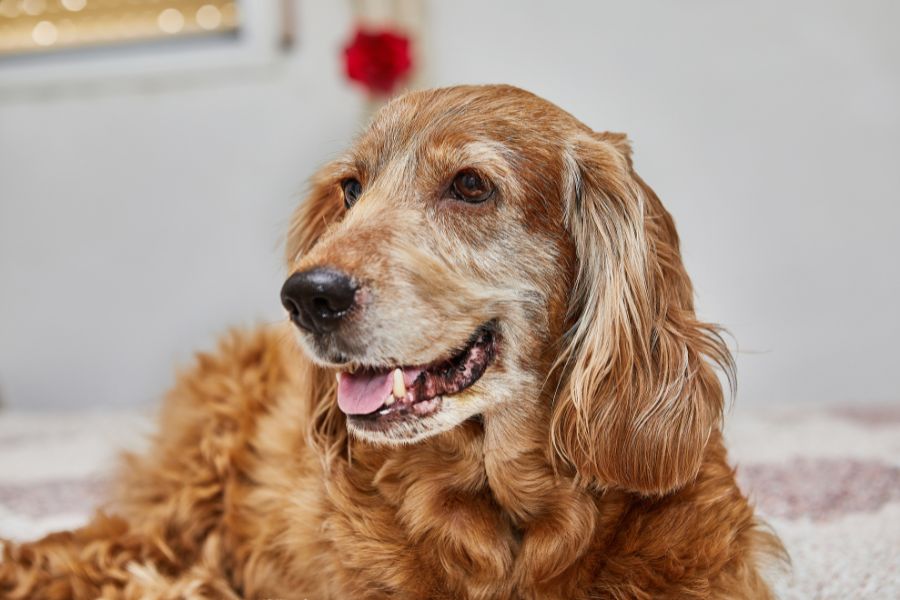
As dogs get older, owners need to adjust their walks. Walks become slower, with more stops, more sniffing, and shorter distances. Even with these changes, or perhaps because of them, these walks often become the most meaningful part of the day.
As dogs age, their experience of the world changes, including how they go on walks. What used to be easy now needs more thought and care from owners. It’s normal to change how you care for your pet as they get older. When you understand what your senior dog needs, you can make walks that truly help them instead of just sticking to old habits.
What’s Actually Happening in Your Dog’s Aging Body
Most dogs are considered seniors after age seven, but larger breeds may become seniors as early as five or six. As dogs get older, they go through changes that affect how well they move, how much energy they have, and how comfortable they feel during exercise.
Joint problems are the most common health issue for dogs, especially as they age. Osteoarthritis is very common in older dogs, affecting about 80% of dogs over eight years old. It develops slowly, so many owners don’t notice it until it has already made moving much harder for their dog.
Early signs of arthritis include: stiffness after resting, hesitating to jump or climb stairs, a subtle change in gait (how they walk), or lagging behind on walks they used to lead. Sometimes the signs aren’t always big and obvious. It can just be a dog that seems a little less enthusiastic than they used to be.
As dogs get older, they lose muscle mass. With less muscle, their joints have less support, which can make arthritis feel worse over time. Their heart and lungs also don’t work as well, so they get tired faster and take longer to recover.
None of this means walks become harmful for them. Regular, appropriate movement is still one of the best things you can do for an aging dog! It helps maintain muscle mass, supports joint mobility, maintains a healthy weight, and provides mental stimulation vital to their well-being.
Adjust the Frequency and Length of Walks
The most important change to senior dog walking routines is switching from longer walks to several shorter ones spread across the day. You can tailor this approach to your specific dog breed, but it keeps the joints moving without overtaxing them, avoids the kind of fatigue that leads to stiffness, and gives your dog more regular opportunities for mental enrichment and bathroom breaks, which are increasingly important as bladder control can become less reliable with age.
What counts as a “shorter walk” depends entirely on your individual dog. A Border Collie at age ten may still be able to do a 20 to 30-minute walk at a gentle pace. A large breed like a Rottweiler or Great Dane at eight might do better with 10 to 15-minute outings. If they’re slowing significantly, seeking grass to lie on, or showing any signs of lameness, that’s the walk’s natural endpoint regardless of what the timer says.
Pay Attention to the Surface and Terrain
For senior dogs, what they’re walking on matters considerably more than it ever did before. Hard surfaces like concrete and asphalt offer no give, which means every step sends impact directly into already compromised joints. Grass, packed earth, and woodland trails are significantly more forgiving and will make the same distance noticeably more comfortable to cover. Where you have a choice, choose the softer route.
Uneven terrain with gentle variation, a slight incline, and a grassy slope can actually be beneficial in engaging different muscle groups and encouraging balance. Rough, unpredictable ground, loose gravel, or steep hills ask a lot of a dog whose physiology and muscle strength have declined. Stumbles happen more easily in older dogs, and a stumble on difficult terrain can cause real injury.
Wet surfaces should also be considered. An older dog with weakened muscle strength and joint pain is more vulnerable to slipping, and a slip that a younger dog would shake off can cause a muscle strain or worse in a senior. Avoid smooth, wet pavement where possible, and consider whether paw-grip aids or booties might help a dog that struggles with traction.
Let Your Dog Lead the Pace
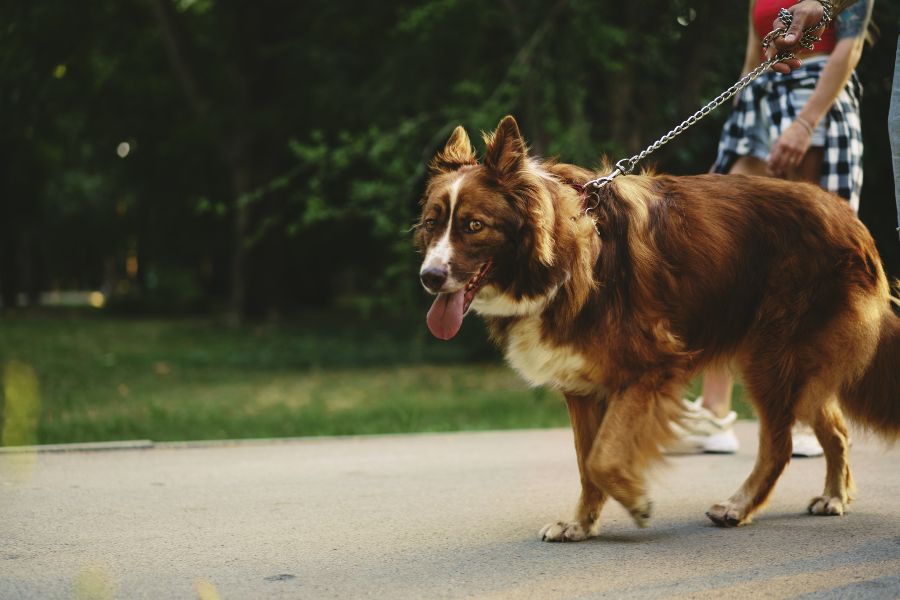
This sounds obvious, but senior dog walking works best when the human relinquishes control of the pace and follows the dog’s lead rather than maintaining a human walking pace that the dog has to keep up with.
A slow walk is not a failed walk. A walk full of long sniff-stops is not an unproductive walk. Olfactory exploration is one of the richest forms of mental stimulation available to dogs, and for seniors whose physical capacity has reduced, smell becomes an even more important channel for engaging with the world. Letting your dog stand and process a scent for two full minutes isn’t a waste of time. It’s giving them something very valuable.
Pay attention to the signals that your dog is trying to tell you that they’ve had enough: they may voluntarily sit or lie down, turn back around to go home, show significant slowing down, changes in breathing, or signs of lameness. These aren’t stubbornness or laziness. These are signs of communication in a senior dog, and not laziness.
Watch What Happens Before and After the Walk
Senior dog walking doesn’t begin and end at the front door. What happens immediately before and after matters more than most owners realize.
Cold muscles and stiff joints need a moment to warm up before any sustained movement. Rather than heading straight into a brisk pace, let the first few minutes be slow and gentle, allowing your dog’s body to ease into motion. This is especially important on cold mornings, when joints are at their stiffest.
After the walk, watch how your dog settles. Some stiffness after rest is normal in older dogs, but if your dog seems significantly more uncomfortable after a walk, or is reluctant to lie down, that’s a signal the outing may have been too long or too demanding.
A warm, supportive place to rest after a walk makes a real difference for arthritic dogs. Orthopedic beds that allocate weight evenly and reduce pressure on joints are worth the investment at this stage of a dog’s life. If your dog tends to stiffen up after rest, a gentle massage along large muscle groups before they rise can help ease the transition back into movement.
When to Talk to Your Vet
Any significant change in your senior dog’s walking ability, willingness, or recovery warrants a conversation with your vet. Pain in dogs is notoriously underreported as they mask it well, and what looks like “slowing down with age” is sometimes undertreated arthritis that could be meaningfully managed with medication, supplements, or physiotherapy.
Hydrotherapy is a great intervention for senior dogs that can help ease pain and discomfort. The water’s buoyancy reduces impact on joints while allowing a full range of motion, making it therapeutic for arthritic dogs in ways that walking on solid ground can’t replicate.
Senior dog walking is one of the great privileges of sharing your life with an older dog. A walk is a daily ritual that makes it clear to your pup that they are still cared for, still seen, and still worth every slow, unhurried step.
If you need assistance with your senior dog walks this summer, contact us today to get your schedule set up!